
Agave are already remarkable plants. With their symmetrical rosettes and range of colors and textures, they can turn any garden, patio, or container into something extraordinary. But sometimes, even a familiar agave can surprise us with something entirely new.
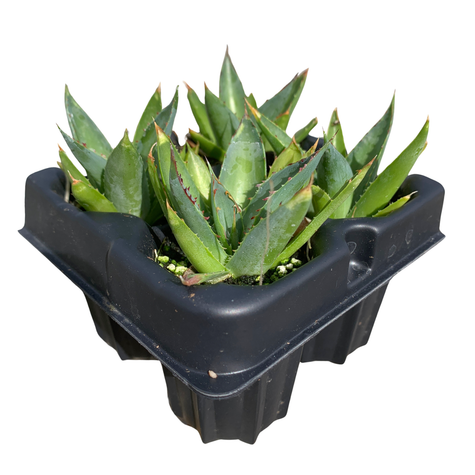
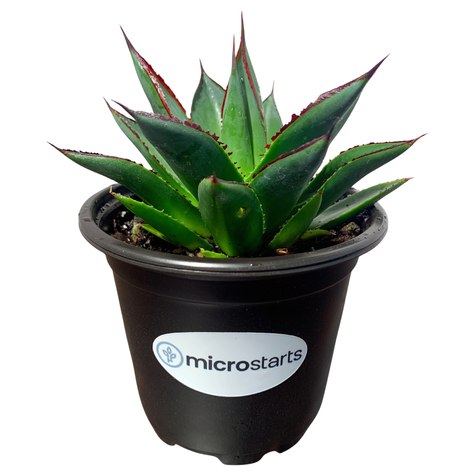
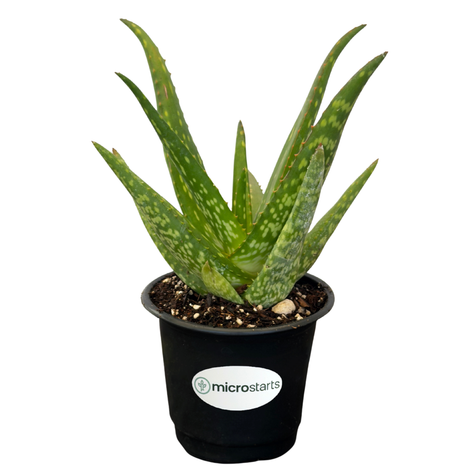
At MicroStarts, we grow a wide range of agave, from established favorites like Blue Glow, Blue Flame, Boutin Blue, Queen Victoria, and Artichoke (Truncata). In the process of growing these agave, however, we sometimes encounter unique individuals with distinctive characteristics all their own, commonly referred to as “sports”.
What Is a Plant Sport?

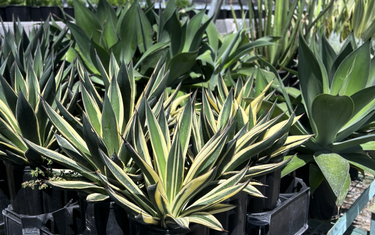
In horticulture, a sport is a naturally occurring variation that develops on an otherwise typical plant. In agave, these differences can be particularly eye-catching. A sport might display unusual leaf coloration or shape, unexpected striping, a different pattern of variegation or range of tones, or change in other physical characteristics that sets it apart from the standard form.
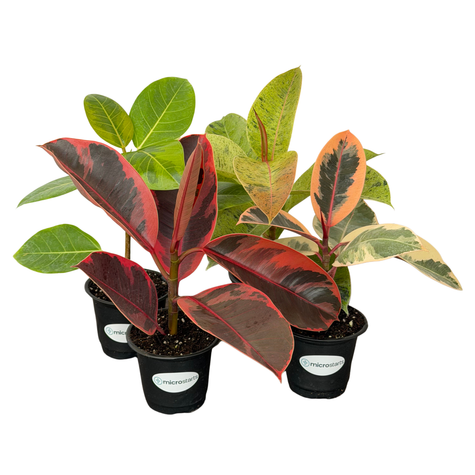
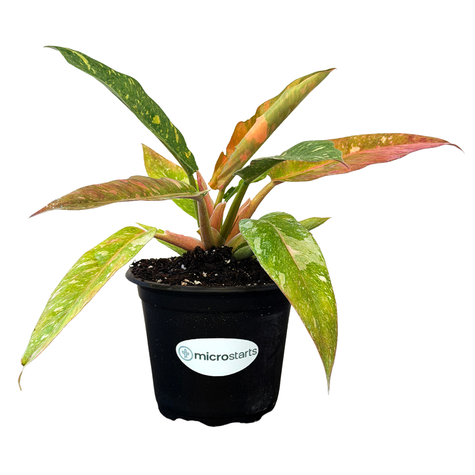
Sports aren't limited to agave, either. They have played an important role in horticulture across many kinds of plants, including fruit trees, ornamentals, and houseplants. Some well-known cultivated varieties began as unusual growth appearing on an otherwise ordinary plant.
The important distinction is that a sport isn't simply a plant that looks a little different because of its growing conditions. Sunlight, temperature, watering, and nutrition can all influence a plant's appearance, but a true sport involves a biological change. Sometimes that change is genetic - in other cases, differences in how plant cells express their characteristics can be involved.
How Do Sports Occur?

Plants grow through the activity of specialized cells that divide and develop into new tissues. Occasionally, a change occurs in one of these cells. If the affected cell contributes to a growing point, such as a bud or shoot tip, its descendants may develop differently from neighboring cells.
This can create a visible variation in a particular part of the plant. For example, a single shoot might develop unusual coloration while the rest of the plant retains its familiar appearance.
Not every variation is permanent, and not every unusual shoot will produce a stable new plant. Some changes affect only a small area, while others can persist as the plant continues to grow. These differences in how cells are organized can influence how a sport looks and whether its unusual characteristics persist during propagation.
From a Single Sport to a New Cultivar

One of the most interesting things about plant sports is that some can become the starting point for entirely new cultivated varieties.
This is where vegetative propagation - such as the tissue culture propagation we do at MicroStarts - becomes important. Rather than growing a new plant from seed, growers produce additional plants from existing plant material.
Why not simply grow seeds from the unusual plant? Sexual reproduction combines genetic material, producing offspring that can differ from the parent. Those seedlings may not retain the sport's distinctive appearance. Vegetative propagation, by contrast, can preserve the characteristics of the original plant because the new plants are derived from its tissues.
The journey from an unusual shoot to an established cultivar can take considerable time and effort. A sport must be distinctive enough to interest growers, sufficiently stable to reproduce reliably, and practical to grow. Not every interesting variation checks all of these boxes.
Appreciating Agave Sports

Established agave cultivars offer plenty to appreciate. Varieties such as Blue Glow Agave, Whale’s Tongue Agave, and Artichoke Agave each have their own recognizable appeal. Their colors, leaf shapes, and growth habits make them favorites among gardeners and collectors.
But an unusual sport offers something different: a variation that may not be widely available, consistently reproduced, or even formally named. And unlike established cultivars, which may be produced in substantial numbers, an individual sport can be truly one-of-a-kind: of sports we see at MicroStarts, we may have only one or two plants with that particular combination of characteristics.
For collectors, that creates a different kind of connection with a plant. You're not simply choosing a familiar variety - you're discovering an individual with its own distinctive character. Its unusual appearance is a reminder of the natural variation that makes collecting plants so engaging.
Explore the Collector's Side of Agave
At MicroStarts, we love the diversity of agave, from familiar named cultivars to unique individual plants. Our Collector’s Shelf series helps celebrate these kinds of unexpected discoveries, and the natural variation that makes every plant special.
Because many of these plants are individual finds, availability can be extremely limited. We may have just one or two of a particular variation, and once those plants are gone, we may never see the same characteristics again!
That's what makes exploring our Collector's Shelf different from shopping for a standard cultivar. You're getting a chance to bring home a plant with a little extra individuality.
Whether you're a longtime collector or simply appreciate plants with distinctive character, there's something special about finding an agave that really makes you stop and take a closer look.

