
You don't need a sprawling orchard or a half-acre vegetable garden to grow your own food. With the right varieties - and the right plants - a single raised bed, a patio container, or a narrow strip of yard can yield cherries, apples, blackberries, tomatoes, or peppers every season.
At MicroStarts, most of our fruit trees and fruiting shrubs are propagated via tissue culture, which means they arrive disease-free, true-to-type, and ready to establish quickly. But your plant variety and growing conditions are just as important!
Why Small-Space Edible Growing Is Having a Moment
Home food growing has seen a surge of interest in recent years, and 2026 is proving no different. Gardeners are increasingly motivated by food prices, a desire for self-sufficiency, and the simple satisfaction of eating something they grew themselves.
At the same time, most people aren't working with acres. They're working with patios, raised beds, apartment balconies, or small suburban yards, and they want plants that fit those spaces and produce reliably.
The good news: plant breeders and modern propagation science have made this more achievable than ever.
What Makes a Fruit Tree "Small-Space Friendly"
Not all compact fruit trees are the same. When evaluating whether a variety suits a tight space, consider:
- Natural mature size - Dwarf and semi-dwarf varieties are bred or grafted to stay smaller, typically reaching 6-18 feet versus a standard tree's 20-30 feet.
- Growth habit - Columnar, upright, or weeping forms take up less ground space.
- Container tolerance - Some varieties adapt well to pot culture; others are known to decline without ground establishment.
- Self-fertility - Self-pollinating varieties don't require a second tree, which is critical when space is limited.
- Time to fruit - Faster-fruiting varieties reward small-space growers sooner and with less infrastructure.
The Best Fruit Trees and Fruiting Shrubs for Small Spaces
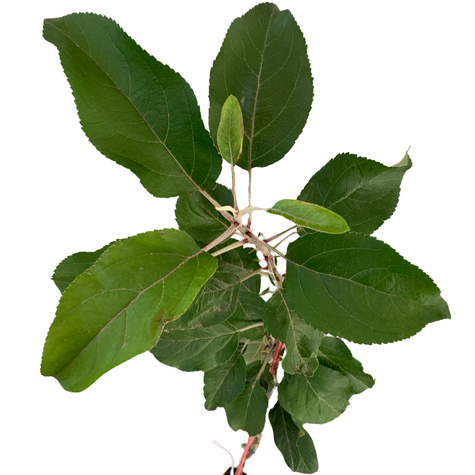
Apple Trees - Featured: Granny Smith

MicroStarts apple trees typically mature at 10-16 feet - compact enough for a small yard, manageable with a ladder, and well-anchored enough to handle most growing conditions. They can also be espaliered flat against a wall or fence, which is a great technique for squeezing serious fruit production out of a narrow space.
Granny Smith is a standout choice: it's one of the most reliable late-season varieties for home growers, and its moderate natural vigor keeps it well-proportioned at that height. Most apples need a second compatible variety nearby for pollination, so plan accordingly.
Mature Height: 10-16 feet
Best For: Small yards, in-ground planting, espalier
Self-Fruitful: Yes, but benefits from cross-pollination
Container-Friendly: Possible in very large containers (25+ gallons), but better suited to in-ground
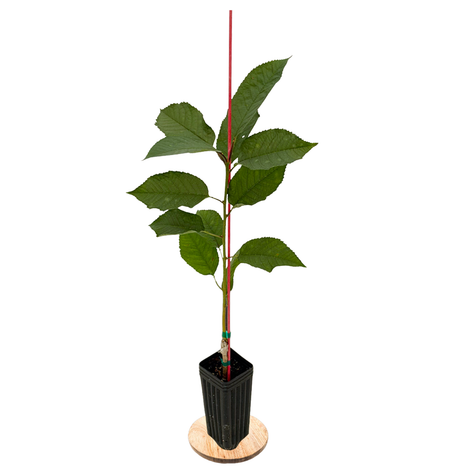
Cherry Trees - Featured: Sweetheart and Stella
MicroStarts cherry trees mature to 15-20 feet unpruned, still meaningfully smaller than a standard cherry's 30+ feet, and very manageable with annual shaping. Fan-training against a wall or fence is a time-tested technique for keeping cherries tight without sacrificing yield.

Sweetheart and Stella are two of the best varieties for home growers. Both are self-fruitful (though benefit from cross-pollination); Stella is one of the few sweet cherries that produces well without a pollinator, and Sweetheart helps extend cherry season with its late-season harvests. Planted together, they extend the harvest window and ensure strong cross-pollination.
Mature Height: 15-20 feet (controllable with pruning)
Best For: Small to medium yards, mixed edible borders
Self-Fertile: Yes, but benefit from cross-pollination
Container-Friendly: Not recommended - best in the ground
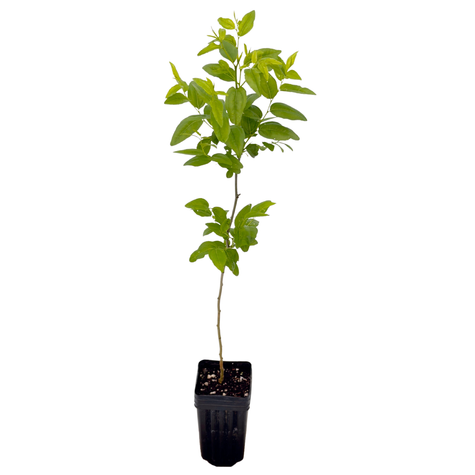
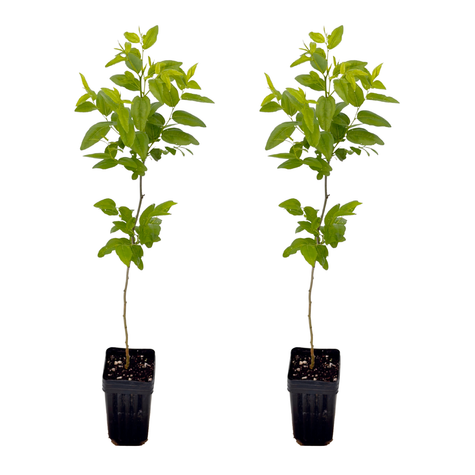
Jujube Trees - Featured: Jujube GA-866
Jujubes are one of the most underrated small-space fruit trees in North America. They're exceptionally drought-tolerant, pest-resistant, and self-fertile - and they'll grow in a variety of soil conditions. The fruit tastes like a cross between apple and date.

Jujube GA-866 is a particularly productive variety selected for consistent cropping, earlier ripening, and fruit quality that holds up across a range of climates. A strong choice for gardeners who want reliability without fuss, and performs well when grown in containers.
Mature Height: 12-16 feet
Best For: Drought-tolerant landscapes, water-restricted gardens
Self-Fertile: Yes
Container-Friendly: Good
Mulberry Trees - Featured: Dwarf Everbearing Mulberry

Mulberries are generally quick to fruit, self-fertile, and exceptionally well-suited to containers.
Dwarf Everbearing Mulberry stays naturally small - typically 7-15 feet - and lives up to its name with a long, rolling harvest rather than one intense flush. It's one of the most genuinely container-scale fruiting trees available, and also behaves well as an edible hedge or privacy barrier.
Mature Height: 7-15 feet
Best For: Patios, containers, hedges, property lines
Self-Fertile: Yes
Container-Friendly: Excellent
Blackberry Bushes
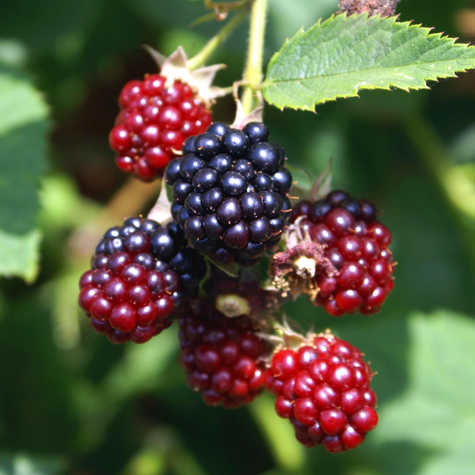
Thornless blackberries punch well above their weight in small spaces, producing full-size, high-quality fruit with a minimal footprint. Blackberries typically do best when trained on a trellis or fence, as this allows the plant to produce as much fruit as possible. A few standouts for compact growing:

- Prime-Ark Freedom - A primocane variety that fruits on first-year canes, meaning faster production and more flexible management. Thornless, large-fruited, and adaptable to containers.
- Sweet-Ark Ponca - Ponca produces exceptionally flavorful fruit with a long harvest window. Considered one of the best-tasting thornless blackberries available.
- Sweet-Ark Caddo - Caddo is noted for early ripening, firm fruit, and an upright habit that stays manageable without heavy trellising.
Mature Height: Varies by variety
Best For: Containers, raised beds, fence lines
Self-Fertile: Yes
Container-Friendly: Excellent
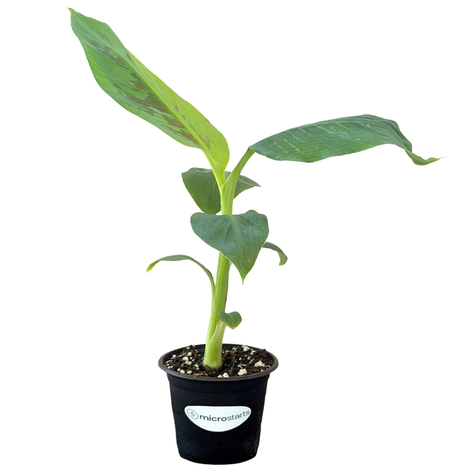
Banana - Featured: Dwarf Cavendish
In areas with warmer winters, such as USDA zones 9-11, dwarf banana varieties can produce fruit in small garden footprints. Even in colder climates, they're grown as dramatic container plants that overwinter well indoors.

Dwarf Cavendish is the most widely grown compact variety and produces the familiar Cavendish banana most people know and love.
Mature Height: 6-10 feet
Best For: Warm-climate gardens, large containers, tropical aesthetics
Self-Fertile: Yes
Container-Friendly: Excellent
Don't Overlook Vegetables: Big Harvests in Small Footprints
Fruit trees get most of the attention in small-space growing conversations. However, vegetables can be a faster, more flexible route to food independence, especially for gardeners just starting out. Most vegetables are naturally suited to containers and raised beds, and they don't require years of establishment before they produce.
MicroStarts vegetable starters are selected from well-regarded varieties known for their flavor, growth habit, and garden performance. A few worth knowing:
Tomatoes

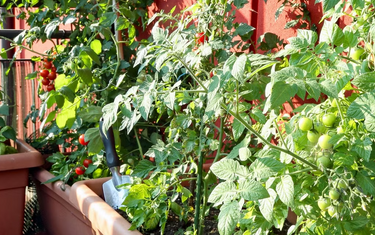
To maximize tomato production, consider adding a trellis or cage around the tomato plant. This helps the plant stay upright during fruit production, and makes harvesting much easier!
- Inca Jewels Container Roma Tomato - Bred for container growing, this Roma type stays compact while producing meaty, low-moisture fruit that's ideal for cooking, sauces, and drying.
- Sweetheart Cherry Tomato - A prolific cherry tomato with sweet, snackable fruit that ripens over a long season. Cherry tomatoes tend to be more forgiving than slicers in containers, tolerating inconsistent watering better than large-fruited types.
Peppers
Habanero Pepper is a high-output hot pepper that thrives in containers. One plant in a 3-5 gallon pot can produce more habaneros than most households will use in a season, and the plants are attractive enough to hold their own in a mixed patio planting.
Container Growing Basics: Getting It Right
If you're planting in containers, a few principles make the difference between a struggling plant and a productive one:
- Pot size matters - Consider the size of your tree at arrival when selecting a container. MicroStarts trees ship smaller than those from many traditional nurseries, and placing them directly into very large pots can increase the risk of overwatering and slow root establishment. It’s generally best to start in a container that’s appropriately sized for the plant’s current root system, then gradually increase container size as the tree grows and becomes established. Vegetables and blackberries can also be started in smaller containers, but should be monitored closely and moved into larger pots as needed to prevent them from becoming root-bound, which can lead to frequent watering requirements and reduced productivity.
- Drainage is non-negotiable - Use a well-draining potting mix, not straight garden soil. Waterlogged roots are the most common cause of container plant failure.
- Fertilize consistently - Container plants can't draw nutrients from surrounding soil. Use a balanced slow-release fertilizer in spring, supplemented with liquid feed during the growing season.
- Winter protection - Roots in containers are more exposed to temperature extremes than in-ground roots. In zones 6 and colder, move fruit tree containers against a protected wall or into a protected area during the coldest months.
- Repot every 2-3 years - Root binding reduces fruit production noticeably and can reduce the life of your tree. Move up a container size or root-prune and refresh the soil every few years.
The Bottom Line
Small-space food growing is genuinely achievable! The right compact varieties, sited correctly and started from quality plants, will outperform whatever's sitting at the big-box store in a fraction of the space. Whether you're after a Dwarf Cavendish banana on the patio, a GA-866 jujube in a sunny corner, a row of Ponca blackberries along the fence, or a container of Sweetheart tomatoes by the back door - there's a plant for the space you actually have.
Not sure where to start? Our team is happy to help at support@microstarts.com.
FAQ: Growing Fruit Trees and Edibles in Small Spaces
Can I really grow a fruit tree in a container?
Yes! Several compact varieties are well-suited to container culture, with Dwarf Everbearing Mulberry, Dwarf Cavendish Banana, and thornless blackberries among the most reliable. Our apple trees can be grown in very large containers (25+ gallons) with attentive care, though in-ground planting is preferred. MicroStarts cherry trees are best suited to in-ground growing.
How long before I get fruit from a fruit tree?
It varies by variety. Blackberries like Prime-Ark Freedom are primocane varieties, meaning they generally fruit in their first season. Apples and cherries typically begin producing in years 2-4. Jujubes like GA-866 can fruit in year 2-4. Dwarf Everbearing Mulberry can be one of the fastest - expect fruit in season 1-3, depending on starting tree size.
Do I need more than one tree for pollination?
Many small-space favorites like jujubes, Dwarf Everbearing Mulberry, Stella Cherry, and thornless blackberries are self-fertile, meaning they can produce fruit without a second plant. However, most self-fertile varieties benefit from cross-pollination.
What soil should I use for container fruit trees?
Use a high-quality potting mix with good drainage, never straight garden soil. Many growers mix standard potting mix with perlite at roughly a 3:1 ratio.
What's the best plant for a beginner with very little space?
For fruit, Dwarf Everbearing mulberry or a thornless blackberry like Prime-Ark Freedom. Both are self-fertile, fast to produce, and forgiving. For vegetables, a cherry tomato like Sweetheart is hard to beat: prolific, fast, and rewarding from a single container.

