
Planning Your Garden Redesign for a Changing Climate
If you're planning a landscape renovation, there's one critical question you need to answer: is your garden ready for the future? With water restrictions becoming more common across much of the United States, rising temperatures challenging traditional lawns, and homeowners seeking landscapes that thrive rather than merely survive, climate-adaptable landscaping isn't just a trend - it's the smart path forward.
At MicroStarts, we’re committed to helping gardeners design landscapes that can handle the challenges of a changing climate without losing their beauty. This article features a selection of our drought-tolerant favorites, demonstrating that practical, water-wise landscaping can also be lush, vibrant, and full of character.
Why Now is the Time Water-Wise Garden Redesigns
The timing couldn't be better for rethinking your landscape. According to recent climate data, prolonged droughts are affecting more regions year after year, with cities from Los Angeles and Denver to Atlanta and Tampa implementing seasonal watering restrictions. Meanwhile, water bills continue to rise - a significant part of which can be due to irrigation of “traditional” lawns and ornamentals.
The good news is that, if you’re starting with a traditional grass lawn or other water-hungry landscape, switching to a water-wise garden can dramatically cut your outdoor water use by as much as 30–70% while creating a more resilient and visually appealing space. On top of that, many water utilities now offer rebates for customers making the switch, making it easier and more affordable than ever to invest in a low-water, sustainable landscape.
Building Your Drought-Tolerant Plant Palette


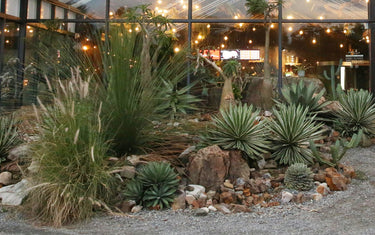
Transforming your garden into a water-wise oasis doesn’t mean sacrificing style or drama. The right combination of bold forms, graceful textures, and vibrant flowers can create a landscape that is both visually striking and remarkably resilient. In the following sections, we’ll explore standout drought-tolerant plants, showing how each layer of your garden can contribute to a cohesive, low-water design that thrives year-round.
Sculpted Centerpieces: Centerpieces That Wow
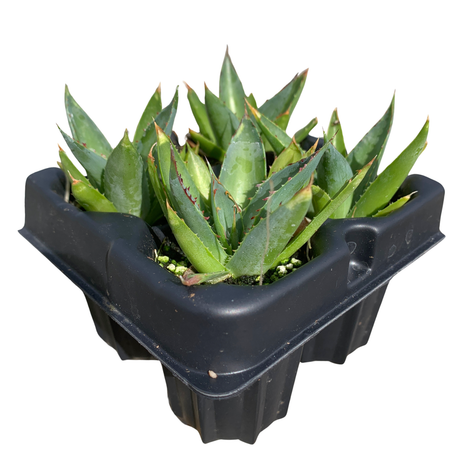
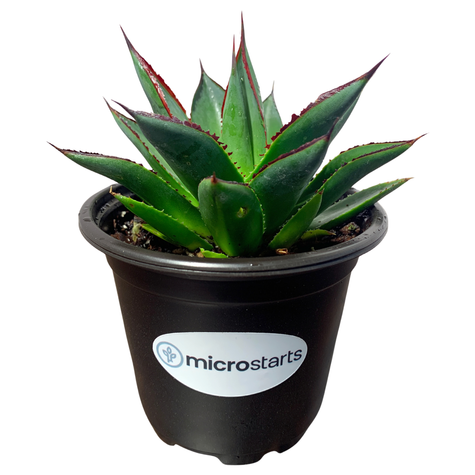
Agave 'Blue Glow': This stunning hybrid showcases blue-gray leaves with dramatic red margins that “glow” in sunlight. Reaching 1-2 feet tall, it's an exceptional choice for mid-sized gardens. The color contrast makes it a standout specimen that pairs beautifully with both cool-toned and warm-toned companion plants.
Its popularity and striking appearance have inspired breeders to develop several new agave hybrids - such as Snow Glow and MicroStarts’ own central and reverse variegated Half Moon varieties - many of which carry forward Blue Glow’s signature color patterns and compact form.


Agave victoriae-reginae (Queen Victoria Agave): The jewel of compact agaves, this species features perfectly symmetrical rosettes with striking white markings along dark green leaves. Growing slowly to 10-18 inches, it's hardy to Zone 7 and perfect for gardens, container displays, or as a dramatic focal point in rock gardens. Its compact size makes it ideal for urban landscapes and small-space gardens.
Agave parryi ‘Truncata’ (Artichoke Agave): A robust and striking agave, this cultivar forms dense, symmetrical rosettes of thick, gray-green leaves with sharp tips. Growing slowly to 2-3 feet tall, it’s hardy to Zone 7 and ideal for rock gardens, container displays, or as a bold accent in small to mid-sized landscapes. Its compact, symmetrical form makes it a standout choice for low-maintenance, drought-tolerant plantings.
Structural Companions: Bold Forms for Visual Impact


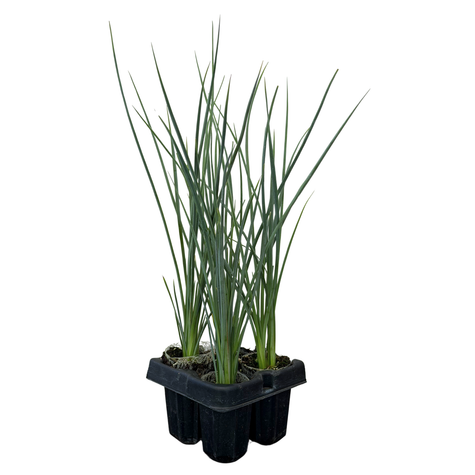
Yucca recurvifolia 'Pendula' (Weeping Yucca): If agaves are the rigid sculptures of your garden, weeping yucca provides graceful contrast. Its soft, arching blue-green leaves create a fountain-like effect that softens the landscape while maintaining exceptional drought tolerance. This variety grows 4-6 feet tall, making it perfect for mid-sized borders or as a textural counterpoint to agave's sharp symmetry. In late spring to early summer, tall spikes of creamy white flowers emerge, attracting pollinators and adding vertical interest.
Furcraea macdougalii (MacDougall's Century Plant): This agave relative offers similar architectural presence to agaves, but with a distinct personality. Best placed similarly to a tree in most landscape plans, this century plant’s blue-green leaves get quite long, growing 6 feet or more in length. Together with its trunk-like stem, a fully grown plant can grow 15 feet tall or more. When mature, they produce an enormous flower spike that can tower over 20 feet. Ideal as a dramatic focal point, Furcraea shines as a single specimen or layered with lower-growing agaves for added depth and visual impact.
Flowering Showstoppers: Adding Color Without Compromising Water Savings


Hesperaloe parviflora (Red Yucca): Despite its common name, Red Yucca (Hesperaloe parviflora) isn’t a true yucca, though it is related to both yuccas and agaves. This versatile plant forms compact clumps of narrow, grass-like foliage 2–4 feet tall, while tall stalks of yellow, coral-red, or pinkish-orange tubular flowers rise 4–6 feet above, attracting hummingbirds and providing color from late spring through fall. Perfect for borders, mass plantings, or container gardens, it adds vertical interest without overwhelming smaller spaces and thrives on minimal care, with overwatering being the most common mistake.
Anigozanthos (Kangaroo Paws): Kangaroo paws bring exotic flair and unexpected color to drought-tolerant gardens. These Australian natives produce fuzzy, elongated flowers in vibrant shades of red, orange, yellow, pink, or burgundy - depending on the variety - that really do resemble tiny kangaroo paws. The flowers appear on tall stems above clumps of narrow, sword-like foliage, creating a striking vertical accent.
Kangaroo paws bloom prolifically from spring through fall in mild climates, or primarily in spring and early summer in hotter regions. They're particularly stunning when planted in drifts of three or more, creating waves of color that draw the eye across the landscape. While they appreciate occasional summer water in extremely hot climates, they're remarkably drought-tolerant once established and actually perform better with less water than more.
Textural Ground Layer: Creating Flow and Cohesion

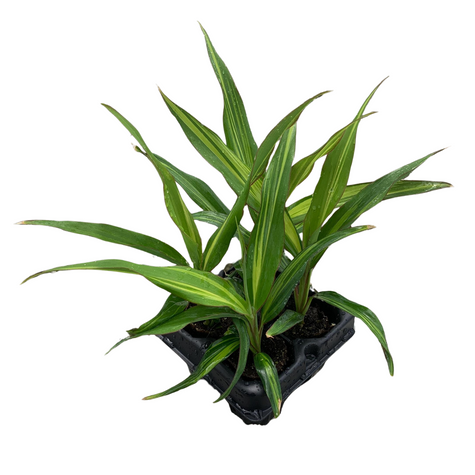
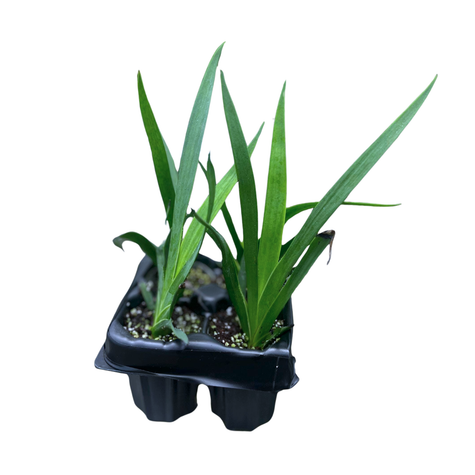
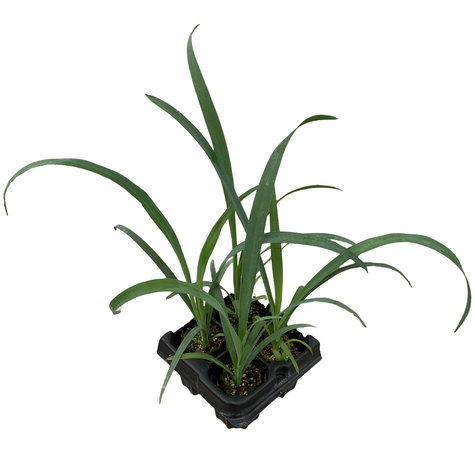
Dianella tasmanica 'Variegata' (Variegated Flax Lily): This is where your water-wise garden gets its finishing touches - the layer that ties everything together and provides year-round visual interest at ground level. Variegated flax lily offers narrow, arching foliage striped with cream and green, creating a bright, fresh appearance that illuminates the landscape without requiring supplemental irrigation once established.
Dianella grows 1.5-2.5 feet tall and slowly spreads to form dense clumps, making it ideal for edging pathways, filling gaps between larger plants, mass plantings, or container combinations with upright succulents. In spring, it produces delicate blue star-shaped flowers on wiry stems, followed by small, purple berries. However, its true appeal lies in its evergreen variegated foliage, which provides year-round color and texture, unifying and complementing bold agave and yucca plantings.
The Future is Dry - But Your Garden Can Be Beautiful
Climate change isn’t just coming - it’s here, and it’s already shaping our landscapes. But that doesn’t mean sacrificing beauty, habitat value, or the joy of gardening. By choosing drought-tolerant, climate-adaptable plants, you create a resilient, sustainable garden that gets better with time instead of requiring ever-increasing inputs.
Ready to get started? Kick off your garden transformation at MicroStarts! With our carefully curated collection of drought-tolerant plants, creating a water-wise, beautiful landscape has never been easier. Want help selecting the perfect plants? Contact our team at support@microstarts.com.

